
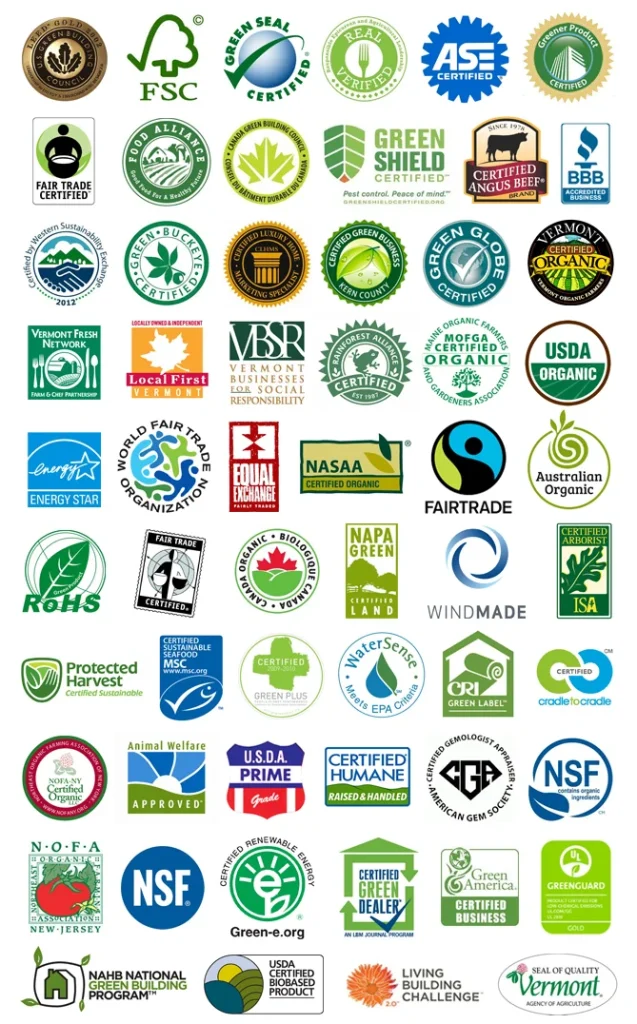
Green certifications, issued by governmental and non-profit organizations, are voluntary standards that verify a company’s commitment to sustainable practices across areas like energy efficiency, pollution reduction, sustainable sourcing, and waste management. As both consumer and regulatory demands for sustainability rise, these certifications are increasingly valuable, helping businesses align with environmental goals and attract eco-conscious customers.
Several types of green certifications cover different sectors: energy certifications focus on efficiency, sustainable forestry certifications ensure responsible forest management, sustainable product certifications verify ethical sourcing, building certifications assess construction sustainability, and corporate responsibility certifications validate social and environmental accountability across a business.
For businesses, green certifications bring economic advantages through cost savings and improved productivity. Certified companies also gain a competitive edge by appealing to the growing base of consumers willing to pay more for sustainably certified products. Consumer interest is tracked by the Conscious Consumer Spending Index, which has shown an upward trend, reaching a score of 57 in 2023, with a strong majority of consumers prioritizing socially responsible brands.
Ultimately, green certifications enable businesses to demonstrate their environmental dedication, helping them qualify for incentives and rebates while empowering consumers to support sustainable practices. These certifications are instrumental in shaping a more sustainable future by bridging business growth with environmental stewardship.
If you are interested in learning more about zero waste, feel free to subscribe to our platform.
Nilah is a platform that provides guidance and resources to make greener choices, one step at a time.
Read more about our privacy policy here.